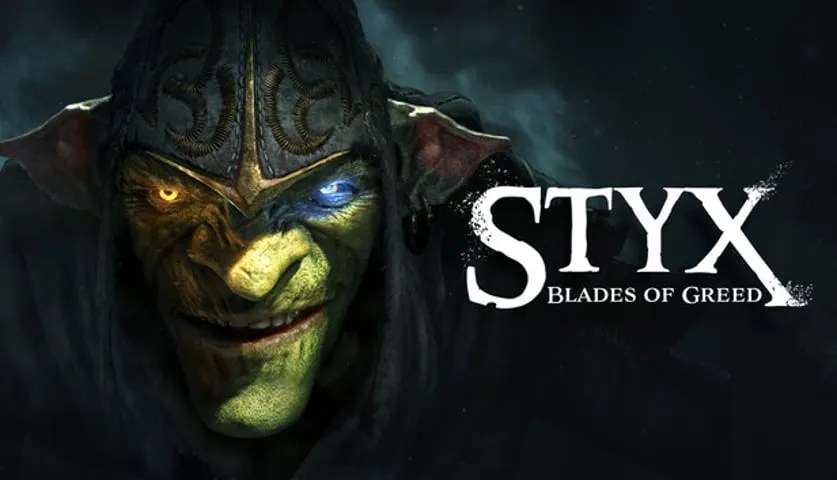
Styx, the foul-mouthed goblin murderer/thief, has lastly returned after a prolonged nine-year break for a brand new journey. It’s a stunning comeback for a distinct segment stealth collection, and whereas it’s undeniably good to see the grumpy goblin again in motion, Styx: Blades of Greed feels extra like a cautious reintroduction than a triumphant return. It’s a extra forgiving, barely extra aggressive tackle the formulation — stable and satisfying within the second — however one which performs issues frustratingly secure in each construction and storytelling.
Accessible On: Xbox, PlayStation, PC
Reviewed On: PS5
Developed By: Cyanide Studio
Printed By: NaconOverview copy offered by the writer.
Surprisingly, the sport picks up immediately from the earlier entry’s cliff-hanger ending. That’s a bit complicated while you don’t truly keep in mind what occurred within the final recreation, so firing up Blades of Greed felt like being thrown into an examination midway via that I had not studied for. Why am I on a crashing zeppelin? Who the hell is that this elf dude? It was virtually a decade in the past, and I can’t keep in mind what I had for lunch yesterday. Assist an outdated codger out, yeah?
One YouTube recap later and I used to be caught up — but it surely seems I didn’t actually should be. For probably the most half, you possibly can muddle via with out a lot data of the franchise, largely as a result of the characters are so bland that no matter got here earlier than barely even issues.

The final plot sees Styx, alongside Helledryn and Djarak, trying to maintain a strong new useful resource known as Quartz out of the Inquisition’s palms. Your companions have their very own motivations for sticking collectively, even when the sport doesn’t do a lot to discover them, whereas Styx as soon as once more occupies the anti-hero function. He can take in Quartz’s energy and it’s addictive as hell, so naturally he simply needs the following repair. The truth that it retains yacking to him everytime he absorbs is an issue he fortunately ignores till it smacks him upside the top.
On paper, Styx’s companions needs to be probably the most fascinating a part of the story. In spite of everything, he’s a loner. Pairing him with an Orc shaman, a Dwarf engineer and a Darkish Elf seems like fertile floor for battle and character growth. As an alternative, this wealthy narrative soil is left largely unplanted. They largely simply… get alongside. There’s little friction till a lot later, and when the minor rigidity does arrive, it lacks influence as a result of the characters themselves are underdeveloped. There’s a faint trace of the dysfunctional found-family trope right here, but it surely by no means really blossoms, both. They don’t like one another, they don’t hate one another – why are they collectively?
Outdoors of Styx himself, the voice appearing doesn’t assist issues. Minor NPCs — particularly guards you snoop on for info — ship their strains with a clumsy stiffness. The dialogue typically feels intentionally hokey, however the performances land squarely in hokey-in-a-bad-way territory. Even the primary companions aren’t a lot better. Flat supply is the largest subject, significantly with Djarak, and Wren’s voice by no means fairly suits the character’s design. Total, the narrative by no means delivers that precision knife to the ribs. It’s high-quality. It exists. However all the things in the end comes right down to the sneaking.

And fortunately, the sneaking continues to be satisfying.
It is a faster-paced rendition of Styx. Earlier entries demanded cautious research of patrol routes and meticulous planning — together with deciding the right second to yack in somebody’s meals in order that they die a horrible loss of life. Right here, Styx is extra agile from the outset. There’s a double soar out there virtually instantly, letting you bounce round dense environments with ease. You will get away with extra, get well from errors extra simply, and customarily play a little bit looser.
Other than that, it’s enterprise as regular: conceal in shadows, duck into lockers, dangle from rooftops, and await that excellent second to both slip previous unseen or carry out an emergency spinal faucet through dagger. Kills might be brutal and noisy or slower and quieter, relying in your choice. It’s at all times satisfying to homicide your method via a whole part, or transfer via it completely undetected like navigating your method via the awkward household BBQ to the burgers with out getting noticed.
The enemy AI is pretty customary stealth fare. Should you’re noticed, guards examine, shuffle about suspiciously for some time, and finally wander again to their patrol routes. There’s little dynamic escalation or adaptation. And it’s at all times hilarious to how shortly they’ll settle for the random deaths of their colleagues through dropped chandelier or poisoning as a freak accident earlier than leaving the corpse there and going again to work. It really works, but it surely hardly ever surprises. Heavier enemies and armoured brutes no less than require a bit extra creativity. You may’t simply dart in for a fast stab, so that you’re inspired to drop chandeliers on their heads, poison close by meals, or use Styx’s powers to strip their armour earlier than ending them off. It’s a welcome wrinkle, even when it doesn’t evolve a lot past that.

Stress general is noticeably decrease this time round. Styx’s expanded agility and extra aggressive toolkit make each murdering and escaping simpler. Getting noticed isn’t catastrophic. Sarcastically, it’s the clunky fight that pushes you again towards stealth. One-on-one fights are manageable because of the lock-on system, however the animations are stiff and awkward sufficient that you simply’ll often determine discretion is the higher a part of goblin valor. Principally change into goblin valor says stabbing from behind is the higher half.
Styx can nonetheless create clones of himself, however there’s been a key change. You now not immediately management them until you particularly activate his mind-control skill as nicely. As an alternative, clones are deployed extra tactically — thrown onto enemies, tucked into hiding spots for ambushes, and even hurled at chandelier chains to set off environmental kills. You lose some high-quality management, however in alternate you achieve the power to coordinate extra fluidly with your individual duplicate. I don’t suppose it’s both higher or worse – simply totally different.
Different powers are extra of a blended bag. Thoughts management is helpful for clearing a path, particularly as soon as upgraded to permit you to pressure enemies into deadly drops. A blast skill that pushes foes away is serviceable, although fight is so clunky you’ll hardly ever need to depend on it. Slowing time proves extra constantly helpful, whether or not slipping previous patrols or shortly dismantling a brute’s defences. Normally, powers this time round skew extra aggressive in comparison with earlier video games, which leaned extra closely into pure avoidance.

As soon as once more, your powers and instruments are restricted of their use because of Amber and assets, each of that are surprisingly laborious to search out. On the one hand, I do admire the concept this makes you play smarter and use your skills solely when wanted. And but, it additionally means you get to have much less enjoyable, and end up in conditions the place you don’t use your powers since you’re saving them for that one time you really want them. Besides that point by no means comes. It’s like hoarding all of the bloody potions in an RPG.
Upgrades are dealt with via ability timber enhancing Amber and Quartz skills alongside extra mundane instruments like acid traps and throwing darts. Finishing important missions is the first option to develop stronger, although collectible emblems scattered via the degrees supply bonus XP, providing you with a purpose to discover a little bit. It’s practical development, if not significantly thrilling.
One change that doesn’t work as nicely is the quick-access wheel system. Every wheel helps you to assign as much as 4 skills, however further wheels are locked behind non-compulsory fetch quests. As you unlock new powers, you’ll both be consistently pausing to reshuffle skills or begrudgingly tackling uninteresting facet aims simply to develop your loadout.
The fetch quests themselves don’t assist issues. Mission directions are sometimes obtuse, pointing you towards a imprecise location just for the merchandise to truly be someplace adjoining that you’d by no means have guessed. It feels unnecessarily fiddly.

That criticism extends to the broader construction of the sport. A lot of Blades of Greed revolves round gathering chunks of Quartz from three important open zones, returning to the zeppelin for a cutscene, finishing a linear mission, after which repeating the method. It’s a loop that turns into predictable pretty shortly.
Now, to be truthful, you possibly can cut back virtually any recreation goal to a fetch quest should you strive laborious sufficient. Even Lord of the Rings is technically only a fetch quest in reverse. The distinction is that many video games disguise that construction with extra selection or narrative momentum. Right here, the seams present.
The three important zones themselves are massive and open, encouraging exploration and a number of routes to aims. Curiously, enemies you remove stay useless throughout missions inside these areas, no less than till the following chapter begins. That persistence removes any long-term draw back to wholesale slaughter, since clearing a zone makes future visits dramatically simpler. New enemies spawn for particular missions, however they’ll casually wander across the corpses of their colleagues as if ready for administration to lastly rent a clean-up crew.
There are a number of methods to strategy aims, although they hardly ever really feel dramatically distinct. It’s often a alternative between climbing a distinct wall, slipping via a distinct vent, or coming into via one other doorway. The liberty is welcome within the second, however replay worth feels considerably restricted until you impose your individual self-restrictions.

Visually, the areas are distinct sufficient to keep away from fatigue. A ramshackle decrease metropolis step by step offers option to pristine higher districts, a jungle teems with literal bugs and orcs, and the ruins of Akanash loom as a reminder of previous occasions. It’s not breathtaking, but it surely’s diversified.
Technically, the sport sits firmly in that single-A-to-double-An area. There’s a faint layer of jank to animations and presentation — nothing catastrophic, however noticeable. A number of minor bugs crop up, similar to guards failing to correctly resume patrol routes and pacing endlessly as an alternative. Framerate is usually secure throughout regular gameplay, although it dips noticeably when utilizing the fast-travel balloon between zones.
For all its flaws, I did benefit from the verticality this time round. There’s ample room to climb, leap, and lurk in rafters. The extent designers clearly perceive that stealth video games dwell and die by spatial layering, and in that respect Blades of Greed succeeds. As you undergo the story you step by step get handed new instruments that open up extra areas to discover, including a tiny sprint of metroidvania to all of the murdering and plotting.
In Conclusion…
After 9 years within the shadows, it’s undeniably good to have Styx again. Blades of Greed delivers stable stealth, satisfying verticality, and simply sufficient mechanical evolution to maintain issues fascinating. But it surely additionally performs issues frustratingly secure. The story lacks chew, the construction leans closely on uninspired repetition, and the presentation by no means fairly escapes its tough edges.
There’s enjoyable available right here — particularly in case your most well-liked stealth philosophy entails leaving no witnesses — however after so lengthy away this isn’t the large comeback Styx may of had. As an alternative, it’s a reliable return that sneaks again onto the scene fairly than kicking the door down.