The second Nioh 3 was revealed as Workforce Ninja’s subsequent undertaking, it instantly jumped to the highest of my most anticipated video games of 2026. That pleasure was dampened considerably when the studio revealed the sport’s “open discipline” stage design. I’m very a lot over open-world video games, however I used to be notably frightened that we have been about to get the Nioh model of Rise of the Ronin – which, actually, was itself Nioh-lite in an open world.
Workforce Ninja’s post-Nioh video games haven’t lacked in attention-grabbing concepts, and Ronin was no completely different, nevertheless it additionally squandered a lot of its potential on what ended up being the sport design equal of considering your inflatable pool abilities can switch to Olympic swimming.
Nioh 3 feels prefer it was made with clear consciousness of that baggage. It wastes no time demonstrating that it’s nonetheless a Nioh recreation at its core, only one that wishes to enterprise past what the construction of these video games has allowed – although solely by itself phrases.
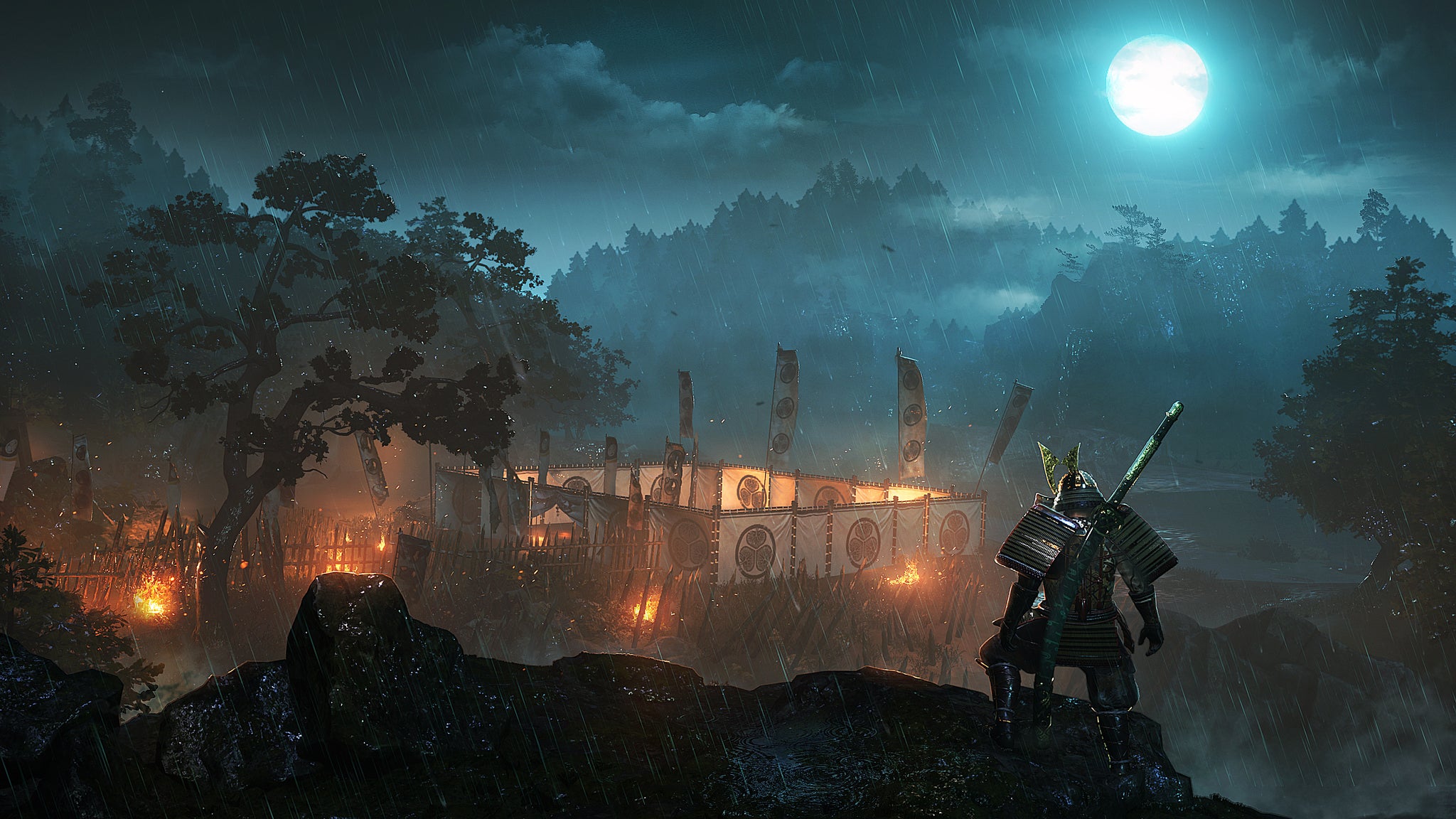
You’d be forgiven for considering that Nioh 3’s open world is its headline characteristic. However the way in which it’s constructed doesn’t name a lot consideration to that, so it was straightforward for me to overlook that I used to be, technically, enjoying an open-world recreation. The workforce’s choice to name it “open discipline” reasonably than “open world” is telling, and it comes throughout as a aware present of restraint.
The world of Nioh 3 is a number of massive maps, every made up of smaller areas. A area is mostly a bundle of the type of curated ranges present in each Nioh recreation, simply with a number of routes of ingress and egress. This, in fact, opens up completely different gameplay alternatives of its personal. Roads and different distractions function the connective tissue holding these traditionally-designed ranges and dungeons collectively, current to subtly push you in the direction of the following factor.
It’s a extra sensible, to-the-point method to that fashion of open-world design that eliminates the minutes-long treads via vacant landscapes so a lot of these video games simply can’t discover a good use for.
You surprisingly don’t get any type of mount to traverse Nioh 3’s world, although you do get a – generally comical – supersprint that kicks in if you hit the street. I as soon as once more can’t assist however admire the restraint. For a mount to make sense, that useless area between attention-grabbing bits of content material would must be far bigger, which, in fact, gamers are promptly going to skip as son as quick journey is unlocked.
Nioh 3’s method gives an alternate, and it asks for a little bit of belief in your half that it gained’t waste your time. Quick journey exists, however I solely used it to mop up after having already explored every area.

The true standout right here is the flexibility to modify between two fight kinds at any second: Ninja, and Samurai. You’re enjoying as two characters concurrently, curating gear and weapons for every, and sustaining two builds. In consequence, loads of the Ninjutsu, throwables and a few Onmyo-like spells have moved to the Ninja, which is a method Nioh 3 has made that a part of it extra accessible. Anybody conversant in the sooner video games is aware of that these highly effective talents have been sometimes clunky to make use of within the warmth of battle.
Most of your time will likely be spent because the Samurai, however the freedom to modify between the 2 on the press of a button offers you the motivation to discover how every of them might excel (or wrestle) in any given scenario.
Probably the most admirable factor about Nioh 3 is the way it builds on years of Nioh and post-Nioh video games, choosing which mechanics and core options to convey ahead, which to evolve, and refining every thing so it is sensible inside the recreation’s world.
Stranger of Paradise’s gear auto-equip characteristic is right here, and a lot better applied. It really works simply as you’d count on; automatically-equipping the most effective gear and weapons for the job for you. It’s malleable sufficient you can toggle it on and off, which you may end up doing, relying on the standard of loot you get and the way bothered you might be about taking 10 minutes to type via two inventories. It even allows you to goal weight courses, so that you by no means need to out of the blue end up fat-rolling in the midst of a boss battle.

My favorite mechanic in Nioh 3 comes from Wo Lengthy: Fallen Dynasty, which stays one of many studio’s most attention-grabbing experiments in latest reminiscence. Elden Ring modified open-world recreation design without end, so motion RPGs that got here after wanted to study from FromSoft’s masterpiece. Fallen Dynasty, nevertheless, was a standard, level-based recreation, so borrowing concepts was out of the query.
What Fallen Dynasty did as an alternative, nevertheless, was provide gamers a really compelling incentive to discover its world, that, crucially, wanted to exist in a recreation with linear ranges. The system boiled right down to step by step rising gamers’ energy the extra components of its ranges they discover.
Nioh 3’s world is far bigger by comparability, however Workforce Ninja discovered an excellent method of evolving the characteristic. Every area on the map is assigned an exploration score, which rises the extra of the varied actions you partake in. Your incentive to take action is two-fold. First, every stage you achieve boosts how informative the map itself turns into. It begins off clean, then grows to indicate a layer of roads and main cities, earlier than it marks down the situation of each collectible.
Climbing via these ranges additionally comes with a set of bonuses to fight, which apply to your character universally. Actually, there’s a mixed score that pushed me to max out every area to get the entire map’s bonus.
You possibly can draw a line from every a kind of again to the video games they originate from, however enjoying this recreation and witnessing how a lot they meaningfully ameliorate the expertise in comparison with previous Nioh video games is the actual win right here.
Nioh 3, in fact, evolves its personal collection’ mechanics, recontextualising them in some cases. The Burst Counter is not tied to your alternative of Guardian Spirit, however is as an alternative assigned to the style-switching button. This achieves two targets. One, it trains you to frequently flip between the 2 – a serious characteristic of this sequel, nevertheless it additionally makes pulling off a Burst Counter simpler, which suggests extra gamers are extra possible to make use of it.
Making the sport extra accessible with out compromising the core expertise is a aim Workforce Ninja clearly had when growing Nioh 3. The place Ronin’s method had all of the subtlety of a sledgehammer, Nioh 3’s as an alternative sands off some unnecessarily sharp edges to encourage gamers to have interaction with the extra enjoyable components of what stays a mechanically dense motion RPG.
Generally that comes within the type of deflects being simpler to tug off (and extra rewarding), and different occasions it manifests in additional advanced methods that can take veterans a while to understand.
One facet that has sadly not advanced is the sport’s narrative. The construction of the entire thing is the one attention-grabbing half about it, and it nearly succeeds at distracting you from simply how underwhelming it’s.
It is a time-travelling story that unfolds over 4 eras of Japan. Your created protagonist is one thing of a time cop (time warrior?) who travels to every period to rid it of the evil of these dreaded Spirit Stones. By legislation, each battle in a Nioh recreation should all the time come again to Spirit Stones.
Intelligent although it could be, that trick can’t masks how outdated and unsubstantial it’s. That is nonetheless a foolish story involving historic characters; not more than an excuse to ally with/battle Figures You Know. You must admire Workforce Ninja’s dedication to utilizing the identical narrative mould with each Nioh recreation, simply slotting in era-appropriate characters and occasions.
Three video games in, I do know higher than to count on a lot from that facet of the Nioh video games, however I used to be pleased to at the least have an thrilling wrapper. Splitting the marketing campaign into a number of eras can be a pleasant and handy excuse to have a number of open-world maps, which is one other method the trek via time stays contemporary.

Nioh 3 isn’t with out irritating moments. Bosses will nonetheless kill you in two hits; platforming guidelines will sometimes confuse you; and there’s loads of PS3-era stage design ethos Workforce Ninja simply can’t appear to eliminate. The PC model runs high-quality, however I count on folks with the higher vary of GPUs to grumble about not having the ability to lock it to 120fps, the occasional stutters when spinning the digicam, and a few crashes when a number of screens are current.
None of that detracts from how large of an motion recreation that is. That it continues to ship the collection’ famend satisfying fight, mechanical depth, and construct selection whereas evolving and constructing on the previous is a none-trivial triumph.
I discover it troublesome to ask extra from Nioh 3. It’s a recreation that proudly broadcasts its targets on the outset, and trusts the participant to find how properly it’s going to nail each one them over the course of its 45+ hour runtime. It’s the assured results of shaking up Nioh’s close to decade-old method that’s solely outshone by Workforce Ninja’s regular hand in crafting it.
Reviewed on PC, code supplied by writer.